


Singer/songwriter Jeff Buckley’s career was short but memorable. His first full-length album, Grace, is considered a classic of alternative music and produced one of the earliest and best covers of Leonard Cohen’s “Hallelujah.” If you’ve heard only one Buckley song, that’s probably it. His immaculate interpretation of the song arguably set off a craze — it has now been recorded by more than 300 artists. But there was a lot more to Jeff Buckley, as the new documentary by director Amy J. Berg reveals.
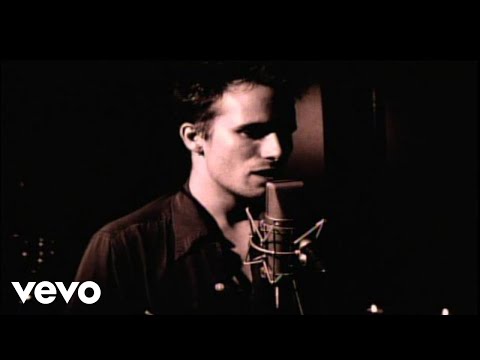
There’s been a lot of ink spilled about Buckley in the 30 years since his untimely death, but It’s Never Over: Jeff Buckley seeks to present the definitive portrait of the low-key legend. Jeff Buckley was the unacknowledged son of Tim Buckley, a folk rocker from Los Angeles. Jeff was raised in Southern California by his mother, who took Jeff to see his father play when he was 8 years old. Shortly after the meeting, Tim Buckley died of a heroin overdose.
This unresolved familial relationship haunted Buckley for the rest of his life. His mother says he had an aptitude for music from the very beginning, and he pursued it as soon as he was old enough to hold a guitar. After working for years as a session hand, Buckley made a huge splash when he sang in New York City at a 1991 memorial service for his father. With one of the best voices in the business, and the stunning good looks to go along with it, Buckley was quickly signed by Columbia Records, who tried to make him the face of their push into alternative music. It was the early 1990s, and Nirvana had just proven that the music of the underground ’80s had broken through to the mainstream. But Buckley was always a little too weird for that. In an age when male singers growled and howled like Eddie Vedder and Chris Cornell, Buckley’s musical heroes were Nina Simone, Led Zeppelin, and Sufi mystic Nusrat Fateh Ali Khan.
During the Grace tour, he met the ultimate ’90s road warriors, The Grifters, at a show in Iowa. The Grifters were the Memphis band who put Shangri-La Records on the map; like Buckley, their influence greatly outstripped their record sales. Buckley and The Grifters’ singer Dave Shouse became fast friends.
Beset with manic depression, Buckley struggled with fame and success. Pressure from Columbia mounted to record a second album. To get away from it all, he moved to Memphis in 1997 to write and record his follow-up at Easley McCain Studios. He started playing shows at Barrister’s, the Downtown club that was the center of the Memphis rock scene after the demise of the Antenna. His Monday night residency became legendary among the few who were there to see a major label recording artist play in a hole underneath the Guatemalan consulate’s parking garage. But shortly before the recording was set to commence in earnest, Buckley decided to go for a swim in the Wolf River. He was 30 years old when he drowned.
It’s Never Over is focused on the people who knew him best, like Shouse, and the women in his life, like musicians Aimee Mann and Joan Wasser. It makes up for the paucity of early footage from Buckley’s life with eye-catching animations. Director Berg, who previously visited the 901 with her documentary about the West Memphis Three, West of Memphis, was clearly influenced by Brett Morgan’s masterpiece Moonage Daydream. It’s a thoughtful and deeply emotional film about a character who never quite fit in in life, and whose death was yet another Memphis tragedy.

It’s Never Over: Jeff Buckley screens exclusively at the Malco Ridgeway Cinema. On Friday, August 8th, there will be a panel discussion following the film’s premiere with the film’s editor Stacy Goldate, music writer Andria Lisle, and documentarian Robert Gordon.